
Melamine vs. Lacquer vs. PP Cabinet Finishes
Melamine, lacquer, and PP look similar in a showroom and behave completely differently after five years of daily use. Here's how to tell them apart before you sign a quote.
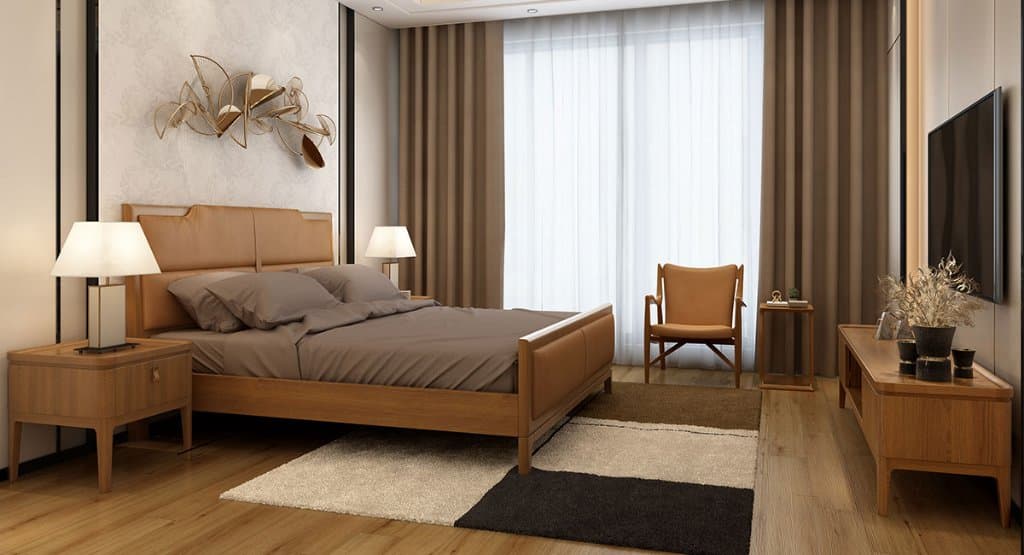
A cabinet finish is the outer surface applied over a cabinet's core material — usually MDF or particleboard — and it does most of the work of deciding how your kitchen looks, cleans, and holds up. Three finishes dominate the market: melamine, lacquer, and PP (polypropylene). They can look nearly identical on a sample board and cost very differently once you factor in the full door, so it's worth understanding what's actually under the surface before you choose.
What Is a Cabinet Finish, and Why Does It Matter?
The finish is a thin protective and decorative layer bonded to a cabinet door's core. The core gives the door its structure; the finish determines its color, texture, scratch resistance, moisture tolerance, and how it ages. Two kitchens can use the same core material and cost twice as much apart depending on the finish alone, so it's the single biggest lever on both price and longevity.
What Is Melamine, and When Does It Make Sense?
Melamine is a paper layer impregnated with melamine resin, then heat-pressed onto MDF or particleboard under pressure until it fuses into the panel surface. It's not a coating sitting on top — it becomes part of the board, which is why melamine resists scratches, heat, and everyday abrasion better than most people expect for a lower-cost option.
It comes in matte, textured wood-grain, and solid-color finishes, and it's the workhorse choice for cabinet boxes, shelving, and interiors where cost efficiency matters more than a mirror-glass look. The tradeoff is edge visibility: melamine panels need edge banding at every cut, and a poorly banded edge is where moisture eventually gets in.
What Is Lacquer, and Why Do Designers Love It?
Lacquer is a liquid coating — usually polyester or polyurethane — sprayed onto an MDF door in multiple layers, then cured and polished. It's the finish behind the ultra-glossy, seamless kitchen doors you see in high-end renderings, and it's also available in soft matte and satin sheens for a quieter look.
Lacquer's strength is depth of color and a continuous, jointless surface — there's no edge banding to fail because the coating wraps the whole door in one process. Its weakness is touch sensitivity: high-gloss lacquer shows fingerprints and micro-scratches more readily than a textured finish, and a chip (from a dropped pan, a moving crew) is harder to spot-repair invisibly than melamine.
What Is PP (Polypropylene) Wrap, and How Is It Different?
PP is a polypropylene film that's vacuum-wrapped or laminated over a shaped MDF profile, including routed edges and curves that melamine sheet stock can't follow. Because the film wraps continuously over the door's contours, there's no exposed edge seam at all — which makes PP notably more moisture-resistant at the edges than banded melamine, particularly around sinks and dishwashers.
PP finishes typically split the difference between melamine and lacquer on price, and they're a strong fit for shaker-profile and routed-panel doors where a flat melamine sheet would need visible banding on every groove.
Melamine vs. Lacquer vs. PP: A Side-by-Side Comparison
| | Melamine | Lacquer | PP (Polypropylene) | |---|---|---|---| | Surface type | Resin-paper fused to core | Sprayed liquid coating | Vacuum-wrapped film | | Typical cost tier | Entry to mid | Mid to premium | Mid | | Edge seams | Yes — needs edge banding | None — sprayed as one piece | None — wraps contours | | Best on | Flat panels, cabinet boxes | Flat and slab-front doors | Shaker and routed profiles | | Scratch resistance | High | Moderate (gloss shows more) | High | | Moisture resistance | Good on face, weaker at banded edges | Very good, sealed surface | Very good, sealed edges | | Repairability | Panel replacement | Professional re-spray | Panel replacement | | Sheen range | Matte, textured, wood-grain | Matte to high-gloss | Matte to semi-gloss |
How Do I Choose the Right Finish for My Kitchen?
Start with how the door is shaped. A flat slab door works with any of the three; a shaker or routed profile with visible grooves rules out sheet melamine unless you're comfortable with banded seams inside the groove. From there, weigh daily use against appearance: households with kids, frequent cooking, or heavy pot traffic tend to do better with melamine or PP's higher scratch tolerance, while a low-traffic showpiece kitchen can lean into lacquer's depth of color without worrying as much about day-to-day wear.
Budget is the third variable, and it's rarely linear — a melamine box kitchen with lacquer doors on just the island or upper cabinets is a common way to get a premium look without paying premium prices across every door in the house.
Where Suofeiya Sources Every Finish
Every finish on this list — along with the hardware that actually determines how a door feels day to day — is specified through Suofeiya's own materials library, so cabinetry, countertops, and finishes are matched from the same factory batch instead of assembled from separate vendors. If you're planning a full kitchen, our kitchen design page walks through layout, finish, and hardware together, and a designer can put swatches of melamine, lacquer, and PP side by side against your actual cabinet profile before you commit to one.
Related reading
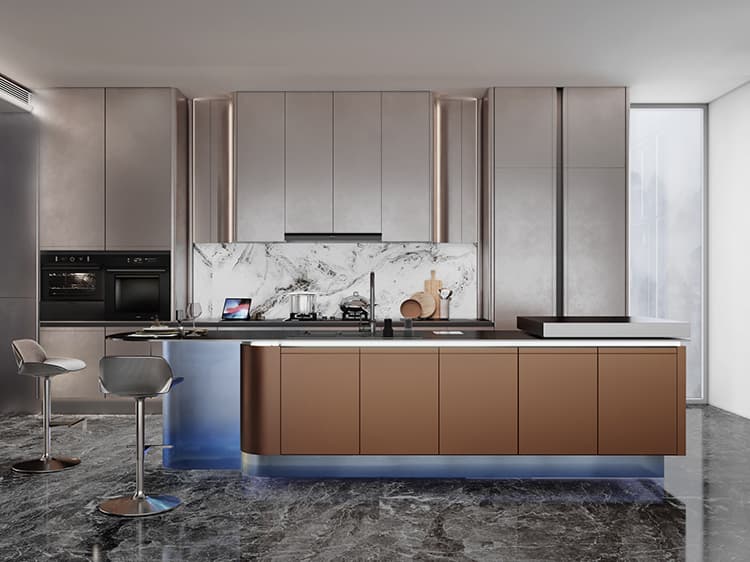
Countertops
Quartz Kitchen Countertops: A Practical Guide
Suofeiya Team ·
Quartz isn't a mined stone — it's engineered from crushed natural quartz and resin, and that difference is exactly why it's become the default countertop for modern kitchens.
Hardware
How Soft-Close Hardware Works in a Cabinet
Suofeiya Team ·
That quiet, cushioned close isn't a sensor or a motor. It's a small hydraulic piston doing a very specific job — and it's the hardware detail that tells you the most about how a kitchen was actually built.